
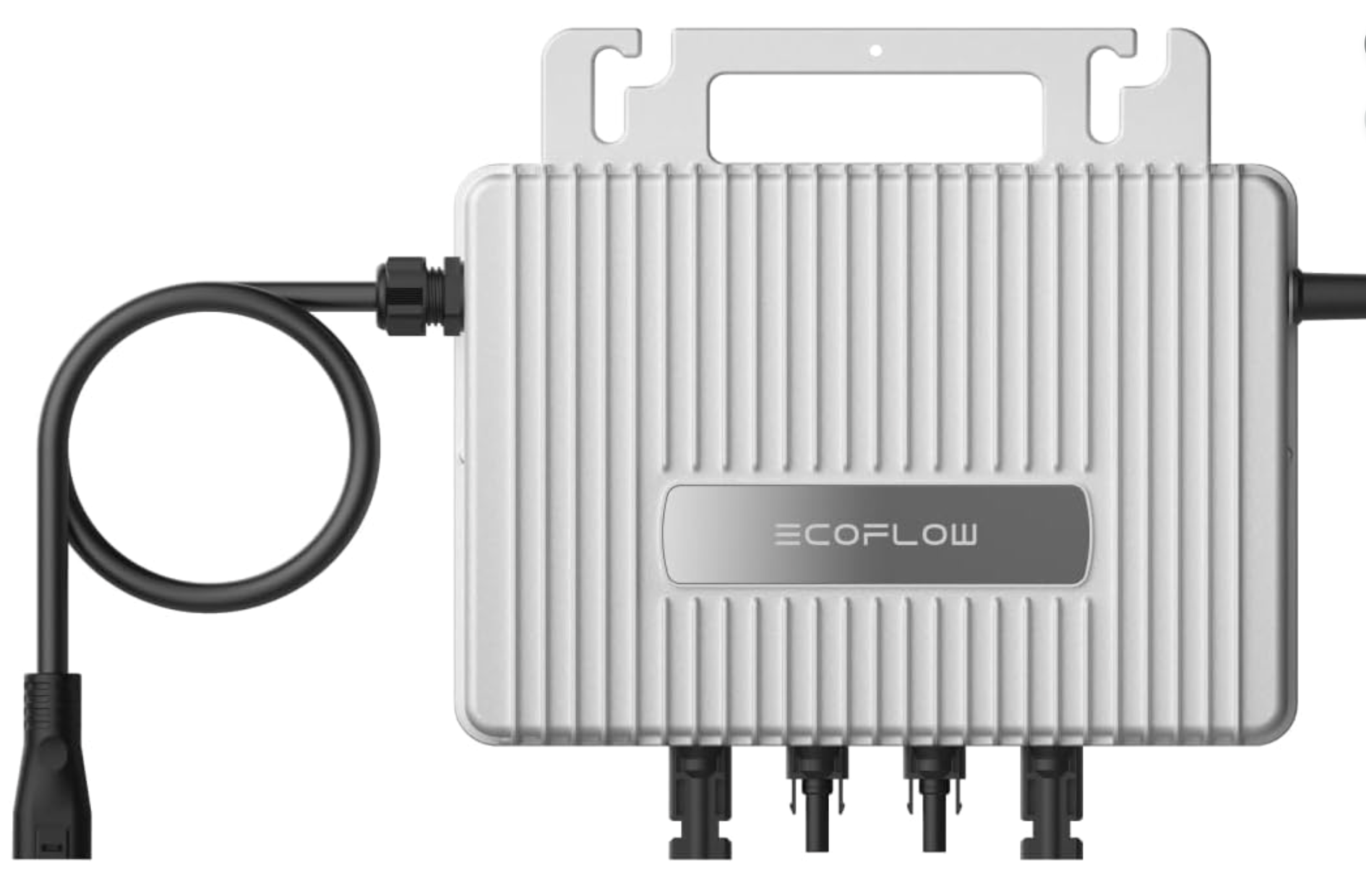
EcoFlow STREAM Microinverter Technical Audit
The mandatory brain of the UK balcony operation. A clinical evaluation of the 800W hard-cap, the 0.1-second anti-islanding relay, and why bypassing G98 grid compliance is a mathematical and legal liability.
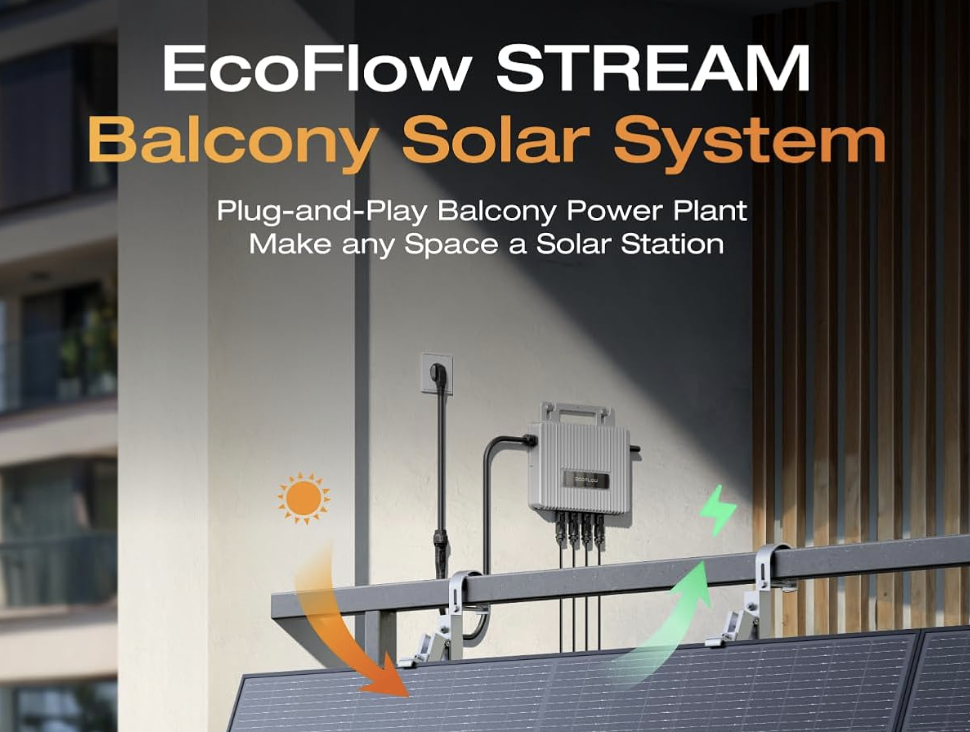
EcoFlow STREAM 800W Microinverter
Engineered specifically for the UK plug-and-play market. Converts raw DC solar yield into highly regulated, grid-synchronized 230V AC power, capping output to ensure total legal compliance.
Executive Summary: The Hardware Reality
In the architecture of a plug-and-play balcony solar system, the solar panels are merely dumb receptors. The battery is simply chemical storage. The EcoFlow STREAM microinverter is the absolute, mandatory brain of the operation. It is the gatekeeper that sits between the chaotic, raw DC power generated by the sun and the highly regulated 230V 50Hz AC ring main of your landlord’s apartment.
This technical audit exists because the internet is flooded with cheap, grey-market 1000W+ inverters shipped from overseas with instructions to “just plug it in.” For a UK renter, following that advice is a catastrophic legal and financial error. If you deploy an uncertified inverter, you are executing an unauthorized structural modification to the National Grid. You void your tenancy agreement, you void your renter’s insurance, and you assume total liability for any electrical fires or grid worker injuries.
The EcoFlow STREAM is not recommended here because it has the best marketing; it is recommended because it strictly adheres to the BS 7671 Amendment 4 regulations and is fully documented on the Energy Networks Association (ENA) Type Test Register. It is your shield against eviction and liability. The following sections dissect exactly how the STREAM’s internal architecture enforces this compliance.
1. The Core Mechanism: 0.1-Second Anti-Islanding
To understand why the EcoFlow STREAM costs more than a generic inverter from a discount website, you must understand the physics of “Anti-Islanding.” This is the single most critical safety feature required by UK grid authorities, and it is the primary reason grey-market inverters are illegal.
Imagine a scenario where a winter storm knocks out the local electrical grid. The power lines on your street go dead. Utility engineers arrive and physically climb the poles or dig up the pavement to repair the lines. They assume the lines are safe because the main grid is off.
However, if your balcony solar panels are still in direct sunlight, and your inverter is still plugged into the wall, it will continue to aggressively pump 230V AC power backward through your apartment’s consumer unit and out into the street’s supposedly “dead” power lines. Your apartment has become an “Island” of rogue generation. If a line worker touches that cable, they will be electrocuted by your balcony system.
The EcoFlow STREAM contains sophisticated active telemetry. It constantly monitors the specific 50Hz sine wave of the UK National Grid. The absolute millisecond the grid frequency drops or the voltage disappears, the STREAM’s internal mechanical relays physically snap open. By law, this disconnect must happen in under 0.1 seconds. The STREAM achieves this flawlessly. It instantly severs the connection between your solar panels and the wall socket, eliminating the islanding threat and protecting utility workers. Cheap inverters lack this certified detection hardware, which is why DNOs will reject them.
2. DC Oversizing and the 800W Hard-Cap
The second pillar of UK compliance is the 800W output limit. Under BS 7671 Amendment 4, a solar device can only be classified as a “Portable Appliance” (meaning you can plug it into a standard 13A socket without hiring an electrician) if it never feeds more than 800W into the circuit.
EcoFlow engineered the STREAM to accept a massive 1200W of raw DC input from your solar panels, while strictly throttling the AC output into your wall at exactly 800W. This mathematical discrepancy is called “Oversizing,” and it is the ultimate technical hack for surviving the UK winter.
Because the UK suffers from heavy atmospheric scattering and diffuse light, a solar panel rarely hits its advertised laboratory rating. By attaching 1200W of panels to an 800W inverter, you brute-force the system. Even on a cloudy November morning when the panels are operating at 40% efficiency, that oversized 1200W array will still generate roughly 480W of usable power. If you had only attached a matching 800W array, that same 40% efficiency would leave you with a dismal 320W.
The only downside to Oversizing occurs on a flawless, cloudless summer day. The panels will generate the full 1200W of DC power, but the STREAM’s firmware will hit its legal hard-cap, ruthlessly throttling the output to 800W. The excess 400W is “clipped” and lost as heat.
3. The Battery Pivot: Defeating the “SEG Trap”
As demonstrated in the simulator above, clipping wastes valuable energy. But there is a secondary, far more insidious financial leak for renters: The SEG Trap.
Because your balcony system is plugged into a wall socket and installed by you (not an MCS-certified electrician), you are legally barred from applying for the Smart Export Guarantee (SEG). This means your utility company will not pay you a single penny for the excess electricity you push back into the grid. If you go to work at 9:00 AM and your apartment is empty, your baseline power consumption might only be 150W (a fridge and a router). If your STREAM inverter is pumping out 800W, that means 650W is being exported to the grid for free. You are literally subsidizing the National Grid with your own hardware.
This is where the STREAM’s proprietary battery port justifies the entire EcoFlow ecosystem. Unlike standard grid-tied microinverters, the STREAM can physically connect to EcoFlow’s DELTA series power stations. It acts as a smart energy router. It monitors your apartment’s baseload usage (via smart plugs), sends exactly what you need to the wall socket to cancel your meter, and reroutes 100% of the remaining solar yield—including the clipped energy above 800W—directly into the DELTA battery as DC power. When the sun goes down, the STREAM pulls from the battery to power your evening television and lighting, completely bypassing the utility companies.
4. Dual MPPT Tracking and Architectural Shading
A balcony is an aerodynamically and structurally hostile environment for solar. Unlike a vast, clear roof, a balcony must contend with changing shadows from structural pillars, overhanging floors, and adjacent buildings.
If you connect two solar panels in a standard “series” string to a cheap inverter, and a shadow falls across just 10% of Panel A, the electrical resistance spikes, dragging the output of Panel B down with it. A single shadow can kill the entire array’s output.
The EcoFlow STREAM utilizes Dual MPPT (Maximum Power Point Tracking) controllers. This means it treats Panel A and Panel B as entirely separate, isolated circuits. The internal algorithms scan the voltage and current of each panel independently hundreds of times per second. If Panel A is plunged into the shadow of a concrete pillar, its output will drop, but the STREAM ensures that Panel B continues to blast at 100% efficiency. For a renter on a cramped balcony, independent tracking is not a luxury; it is mathematically required to achieve your ROI.
5. Thermal Management and Hardware Degradation
Converting raw DC electricity into highly stable AC electricity generates immense thermal friction. Heat is the ultimate destroyer of solid-state electronics. If an inverter gets too hot, its internal components degrade rapidly, and it will forcefully “derate” (throttle its output from 800W down to 300W) to save itself from melting, destroying your yield on the sunniest days.
The STREAM utilizes a fanless design, which is critical because mechanical cooling fans are the first component to fail in an outdoor urban environment due to dust and moisture ingress. Instead, the entire chassis of the STREAM is constructed from die-cast aluminum, acting as a massive, passive heatsink.
| Component / Metric | Technical Specification | Renter Implication |
|---|---|---|
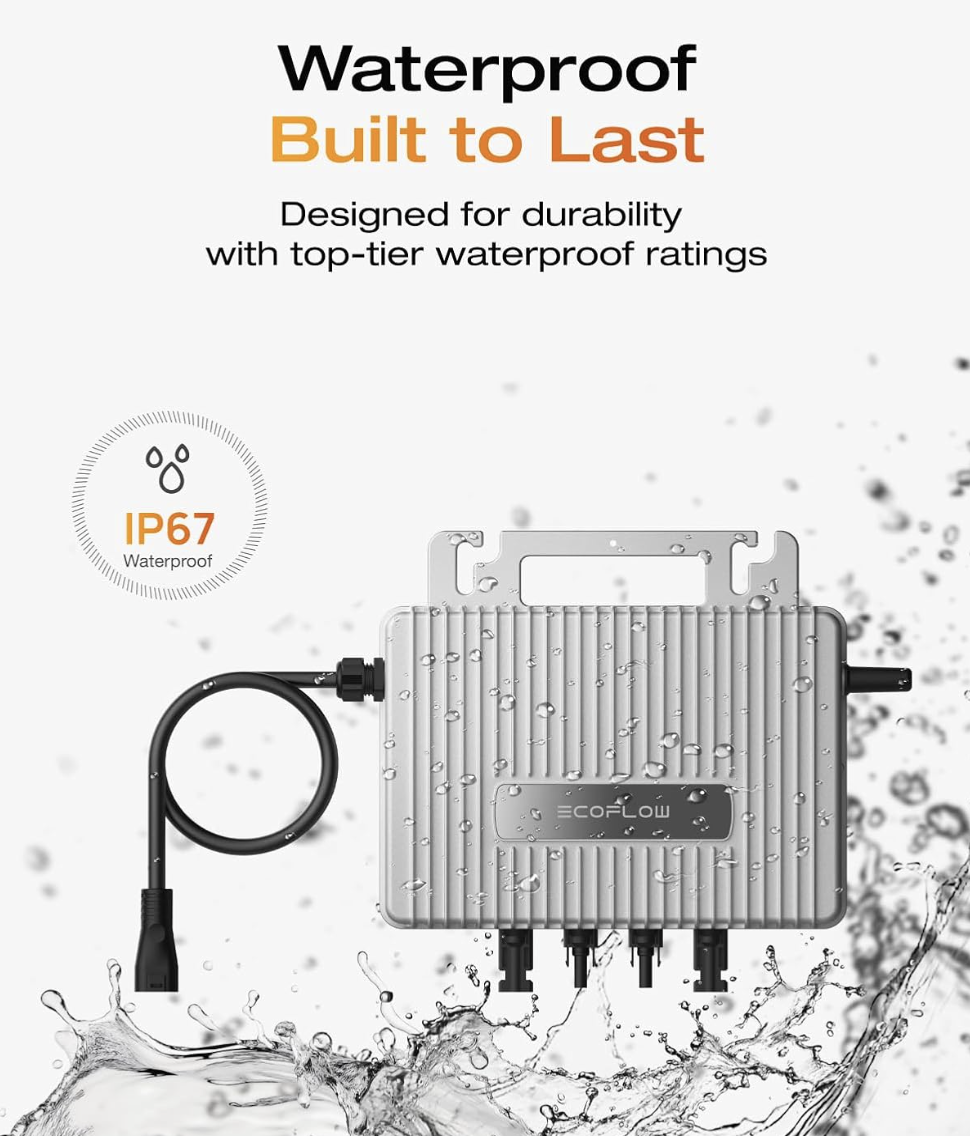
| Ingress Protection | IP68 (Fully Potted) | The internal electronics are encased in solid resin. It can be submerged in water and is impervious to UK coastal salt spray and city soot. |
| Cooling Architecture | Passive Die-Cast Aluminum | Zero moving parts to fail. Silent operation. Will not disturb neighbors on adjacent balconies. |
| Telemetry Connectivity | Wi-Fi (2.4GHz) & Bluetooth | Allows the EcoFlow App to monitor real-time yield and push over-the-air (OTA) firmware updates to ensure ongoing grid compliance. |
| Maximum Input Voltage | 55V DC (per port) | Strictly limits the size of panels you can attach. Connecting industrial 60V+ panels will instantly fry the MPPT controllers. |
Final Verdict: The Amortization Reality
At a retail price hovering around £250 – £300, the EcoFlow STREAM microinverter represents a significant upfront capital expenditure. However, when evaluating the hardware through a clinical, 10-year ROI lens, it is the only logical choice for a UK renter.
Operating a standard 27p/kWh utility tariff, an optimized 800W system utilizing the STREAM to its maximum capacity (canceling baseload and charging a battery) can save a user roughly £180 to £250 annually. The inverter pays for itself in roughly 18 months. Beyond that, its 10-year warranty ensures nearly a decade of pure profit generation.
Do not compromise on the “brain” of your solar architecture. Purchasing grey-market hardware to save £100 exposes you to limitless legal liability, eviction risk, and eventual hardware failure. The EcoFlow STREAM provides the DNO compliance, the dual MPPT shading optimization, and the battery integration necessary to execute a flawless, renter-safe energy strategy.
EcoFlow STREAM Microinverter
| Legal Output Cap | 800W AC (Firmware Locked) |
|---|---|
| Max Solar Input | 1200W DC (Permits Oversizing) |
| Anti-Islanding | 0.1s Active Relay Disconnect |
| Tracking Architecture | Dual Independent MPPT |
| Environmental Rating | IP68 Potted (Submersible) |
| Thermal Management | Fanless Die-Cast Aluminum Heatsink |
| DNO Registration | G98 Type Test Certified |
|---|---|
| Battery Integration | Native Battery Port (Routes Excess DC) |
| Telemetry & Comm. | 2.4GHz Wi-Fi & BLE (OTA Updates) |
| Appliance Classification | 13A Plug-and-Play (No Electrician) |
| Architectural Warning | Do not attach standard panels exceeding 55V open-circuit voltage per port to avoid MPPT failure. |
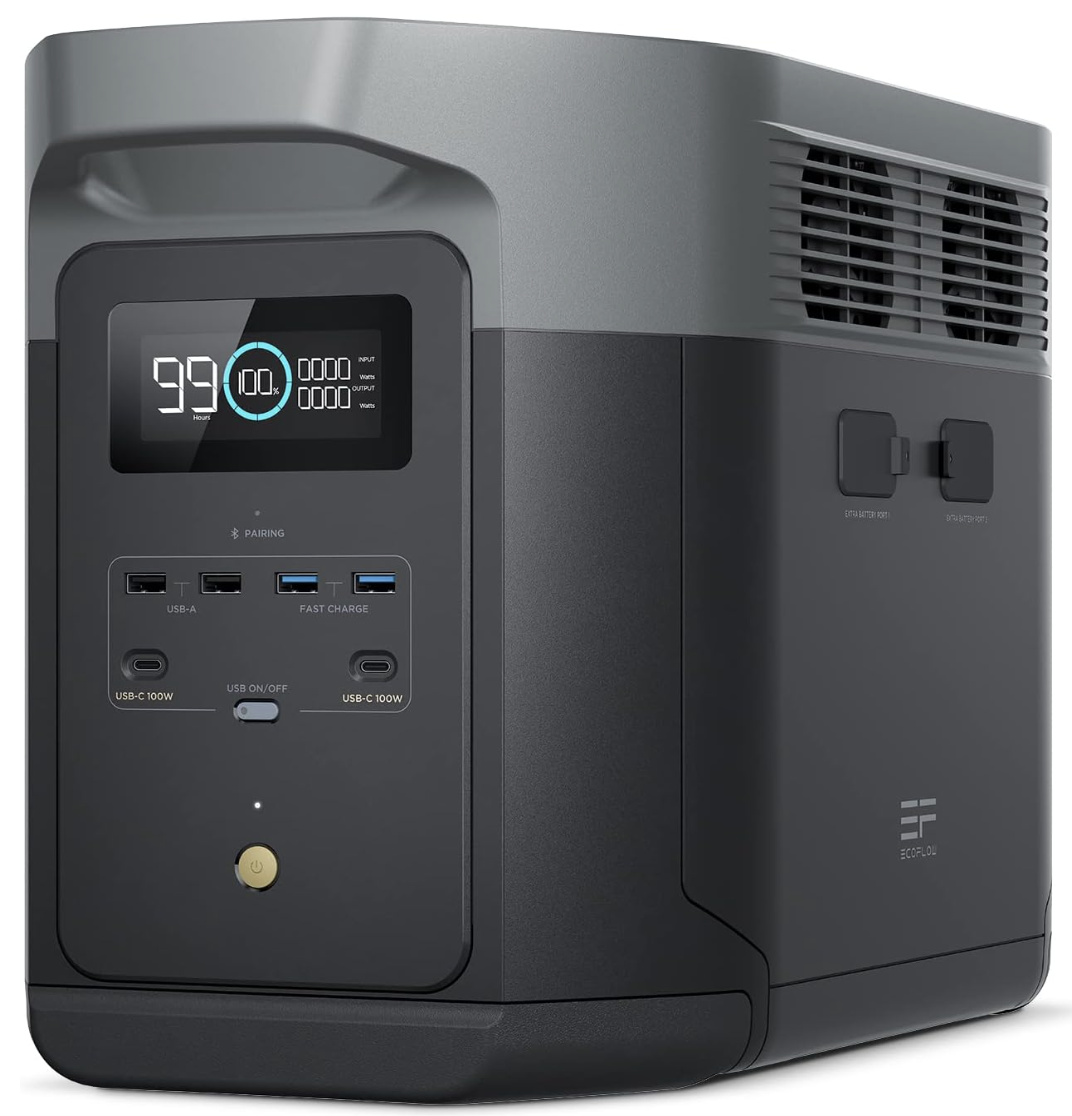
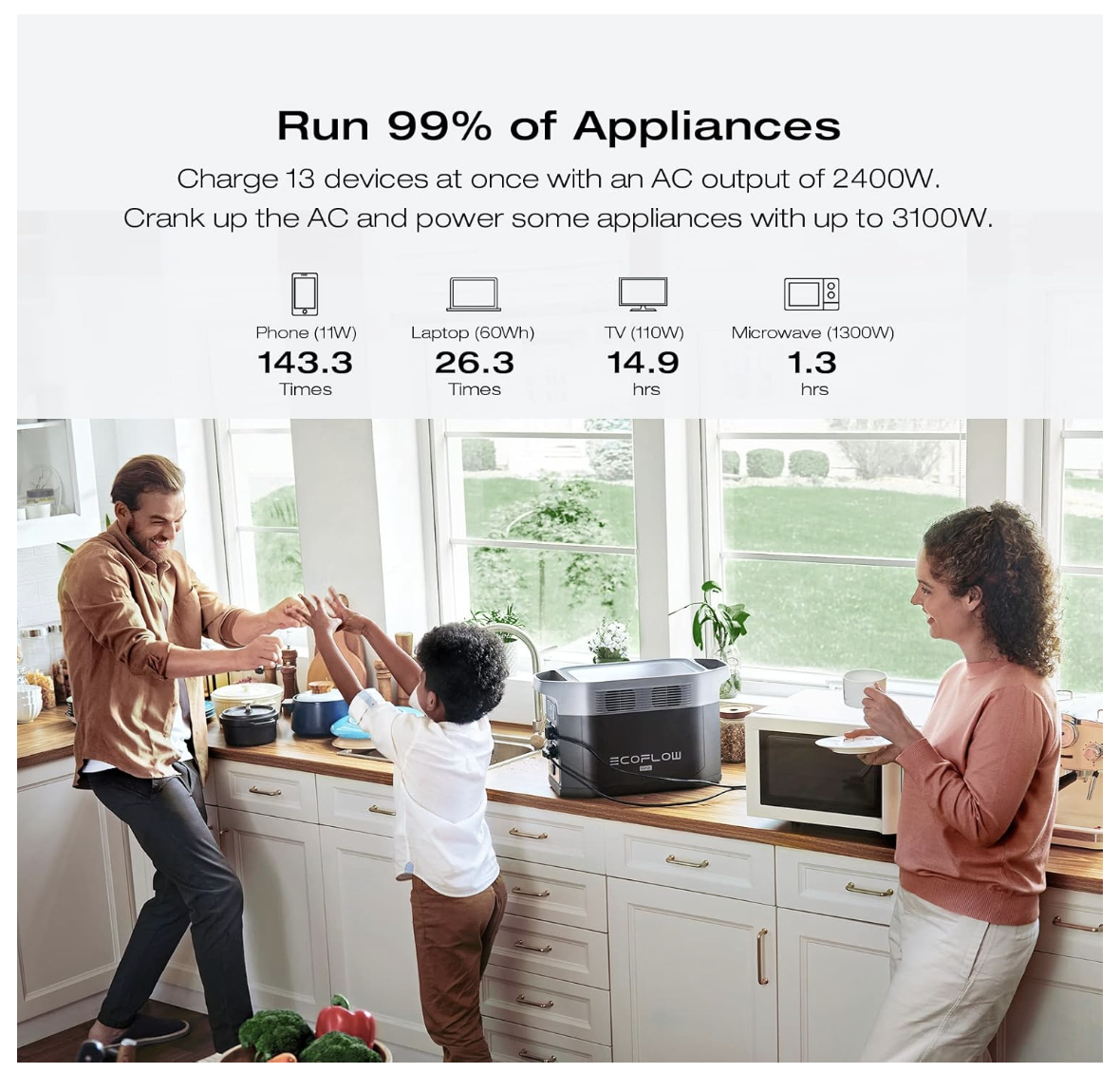
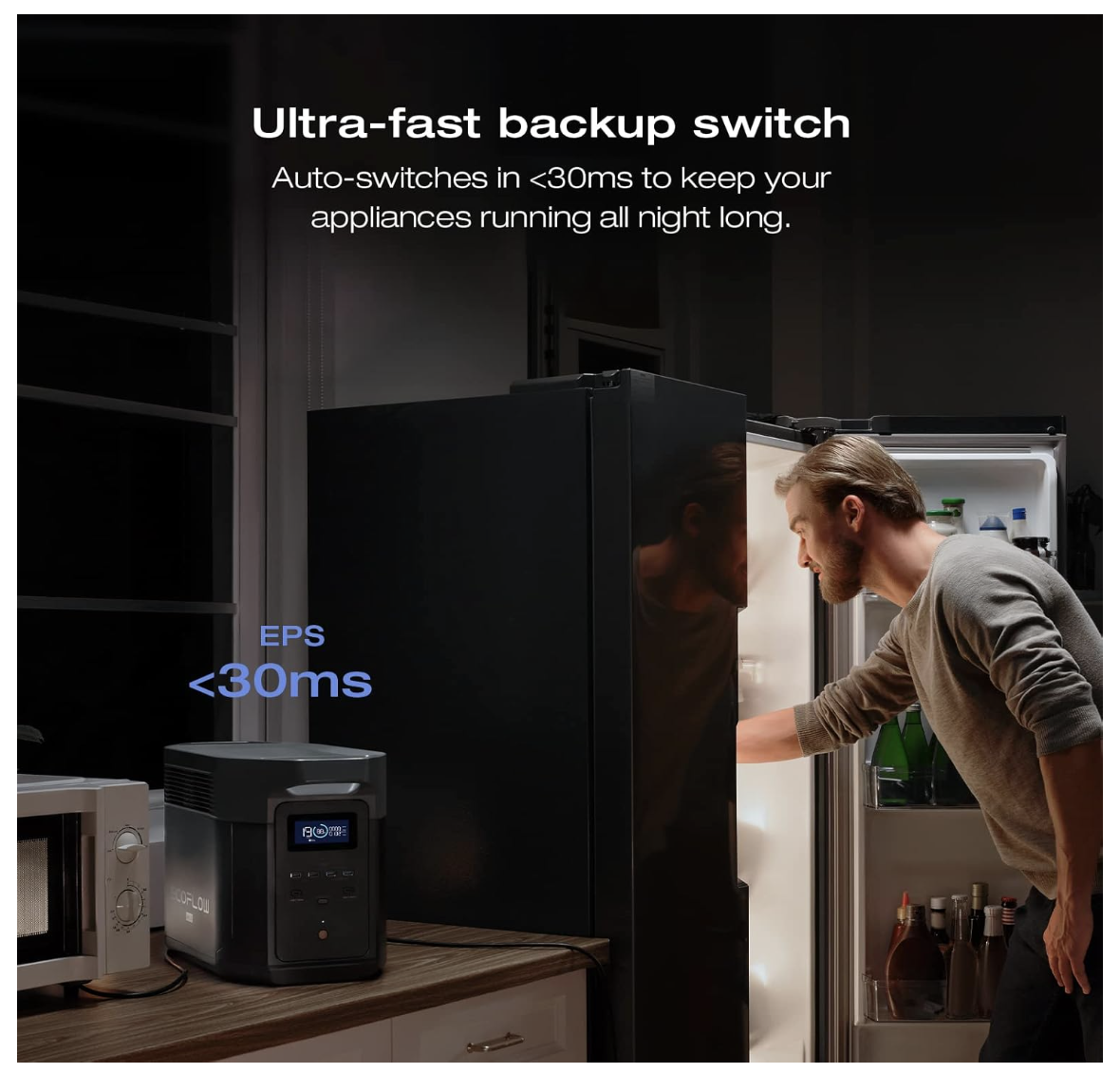
EcoFlow DELTA 2 Max (2-6kWh)
| Battery Chemistry | LFP (Lithium Iron Phosphate) |
|---|---|
| Degradation Threshold | 3000 Cycles to 80% Capacity |
| Base Capacity | 2048Wh (2kWh) |
| AC Output Capability | 2400W Total (3100W X-Boost) |
| Maximum Expansion | Up to 6kWh (via 2x Extra Batteries) |
| Weight Footprint | 23 kg (Consider structural placement) |
| Microinverter Pairing | Native integration with EcoFlow STREAM |
|---|---|
| Direct DC Solar Input | 1000W Max (Dual 500W MPPT inputs) |
| Baseload Cancellation | Aggressive evening load shifting capability |
| Procurement Advisory | Do not purchase if your physical solar array is under 800W. The battery will sit chronically underutilized. |
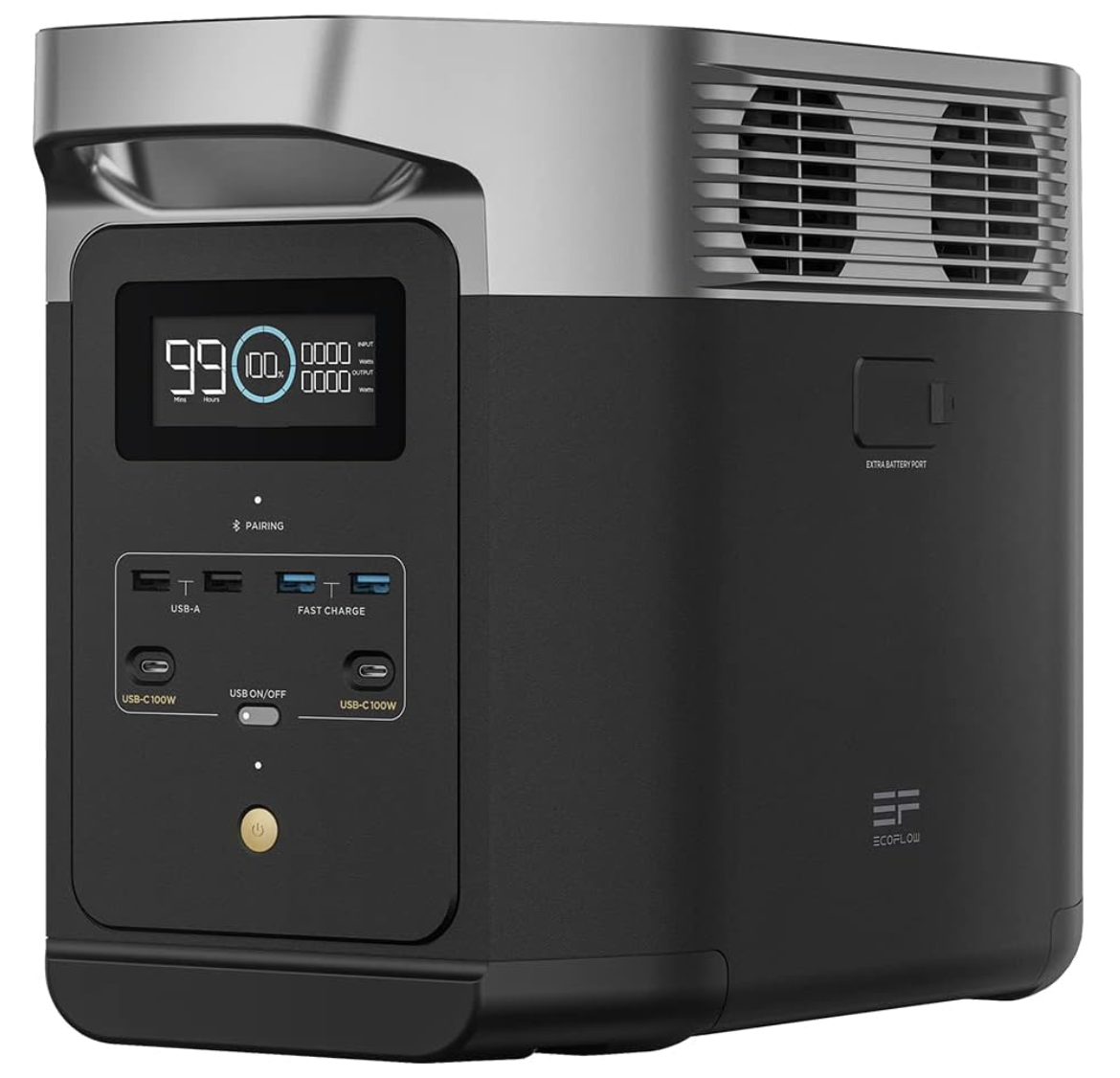
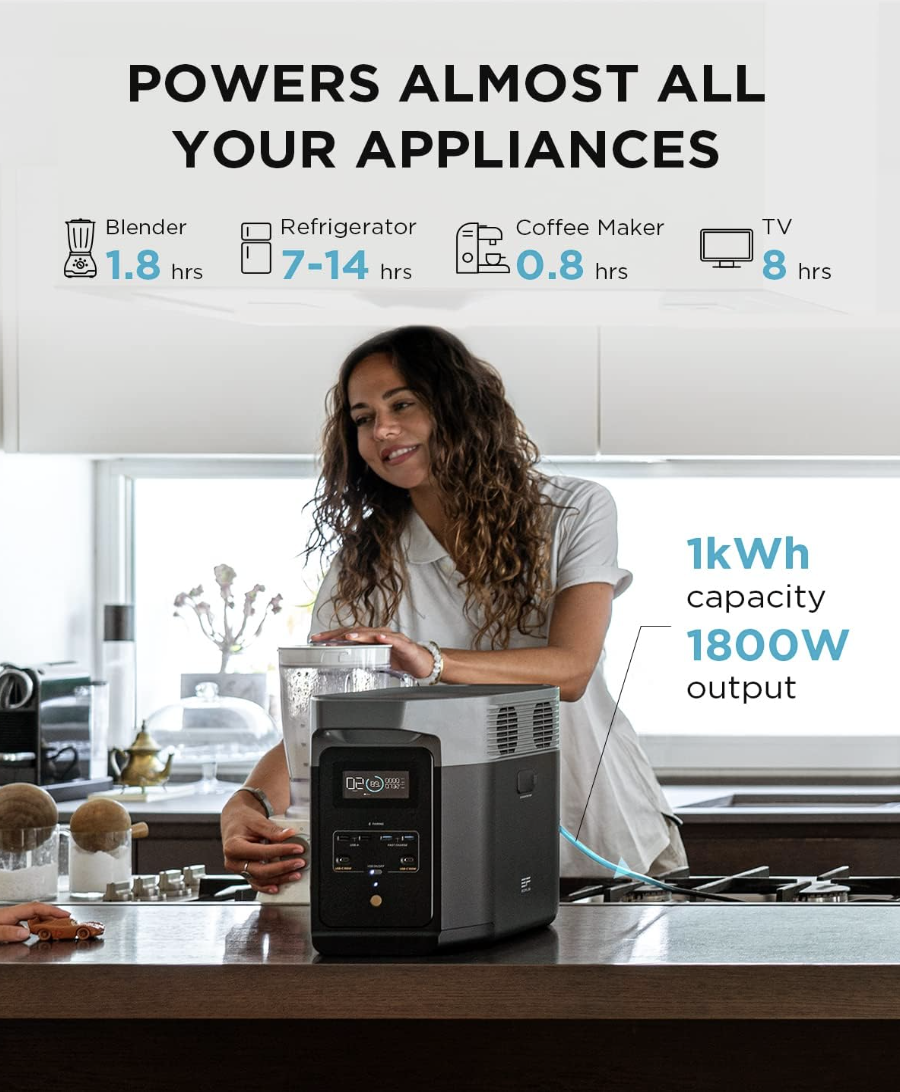
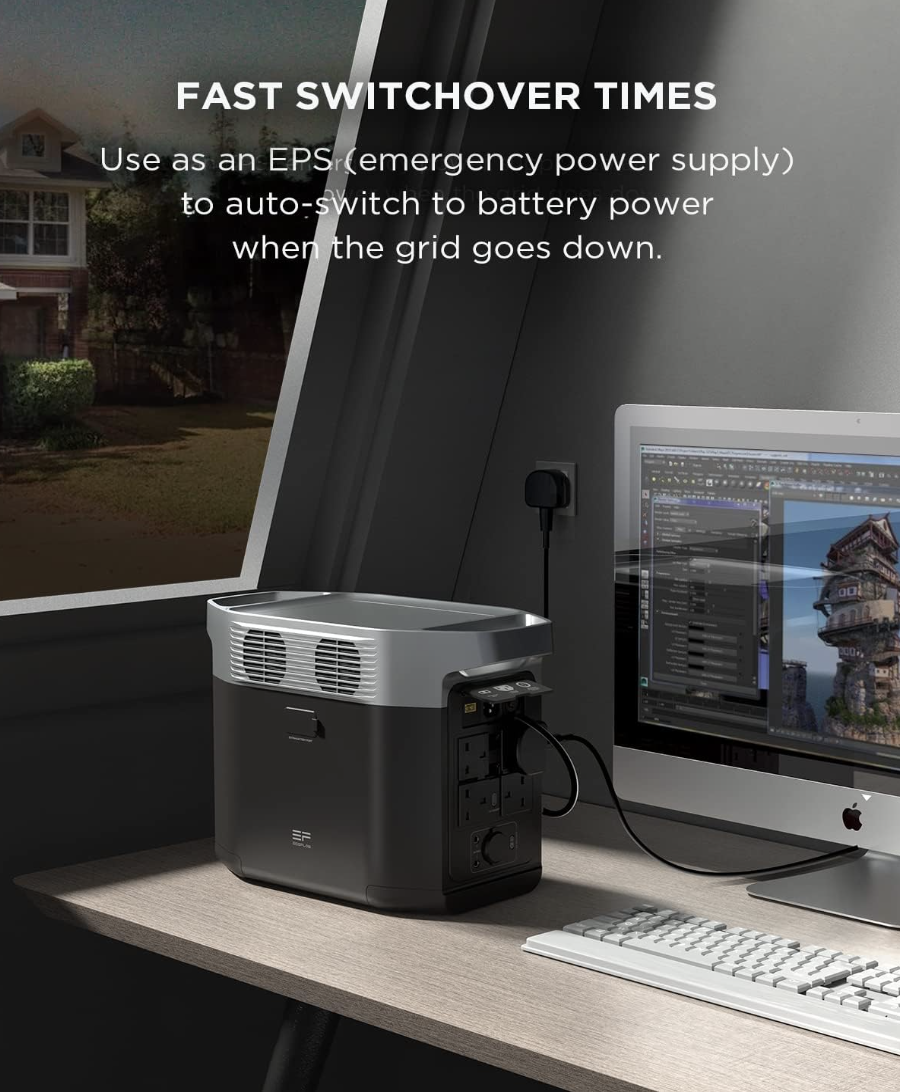
EcoFlow DELTA 2 (1-3kWh)
| Battery Chemistry | LFP (Lithium Iron Phosphate) |
|---|---|
| Degradation Threshold | 3000 Cycles to 80% Capacity |
| Base Capacity | 1024Wh (Optimal UK Sweet Spot) |
| AC Output Capability | 1800W Total (2700W X-Boost) |
| Grid Charging Speed | 0-80% in 50 Minutes |
| Weight Footprint | 12 kg (Appliance Grade) |
| Microinverter Pairing | Native integration with EcoFlow STREAM |
|---|---|
| Direct DC Solar Input | 500W Max (11-60V, 15A) |
| SEG Trap Mitigation | 100% Interception via Smart Plugs |
| Tenancy Liability | Zero. Free-standing portable appliance. |
| Expansion Advisory | Do not purchase the 1kWh Extra Battery unless daily app data proves 100% afternoon clipping. |