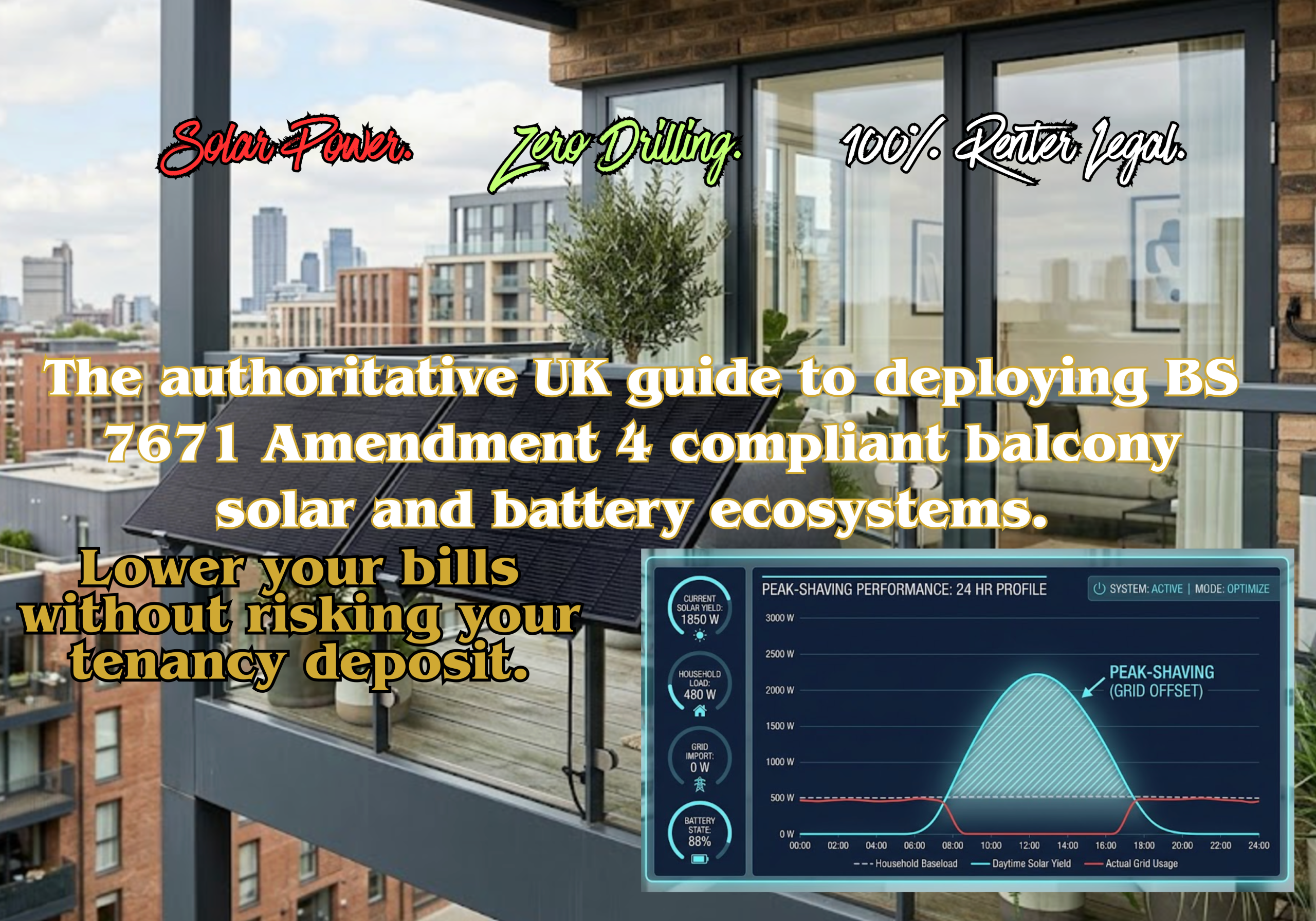
Solar Power. Zero Drilling. 100% Renter Legal.


Featured Compliant Architectures

EcoFlow Logo

EcoFlow

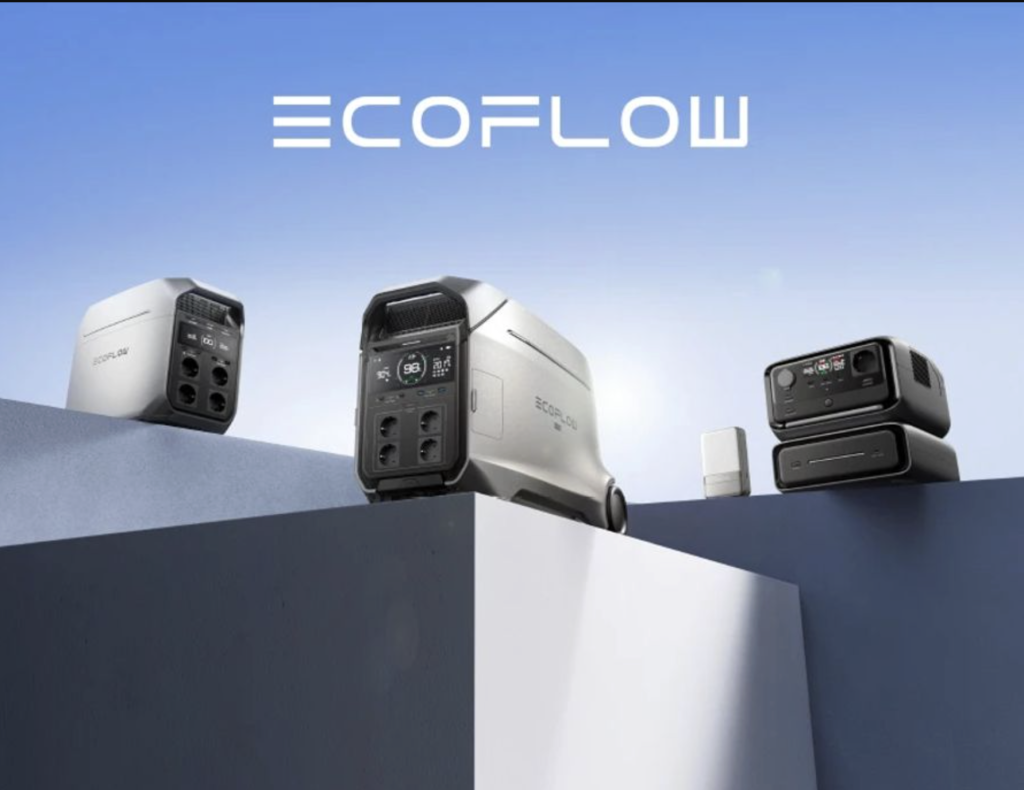
Discover seamless energy integration with our EcoFlow compliant architectures, designed specifically for the UK market.

We provide fully certified, safe, and legal installation pathways for integrating EcoFlow’s powerful ecosystem—including DELTA power stations and Power Kits—into your home or business.

Adhering strictly to BS 7671 and IET Wiring Regulations, our tailored architectures ensure optimal performance, complete regulatory compliance, and reliable backup power. Trust our expertise to design a sustainable energy solution that meets all British safety standards.
EcoFlow Card 1

  • EcoFlow STREAM Microinverter Technical Audit
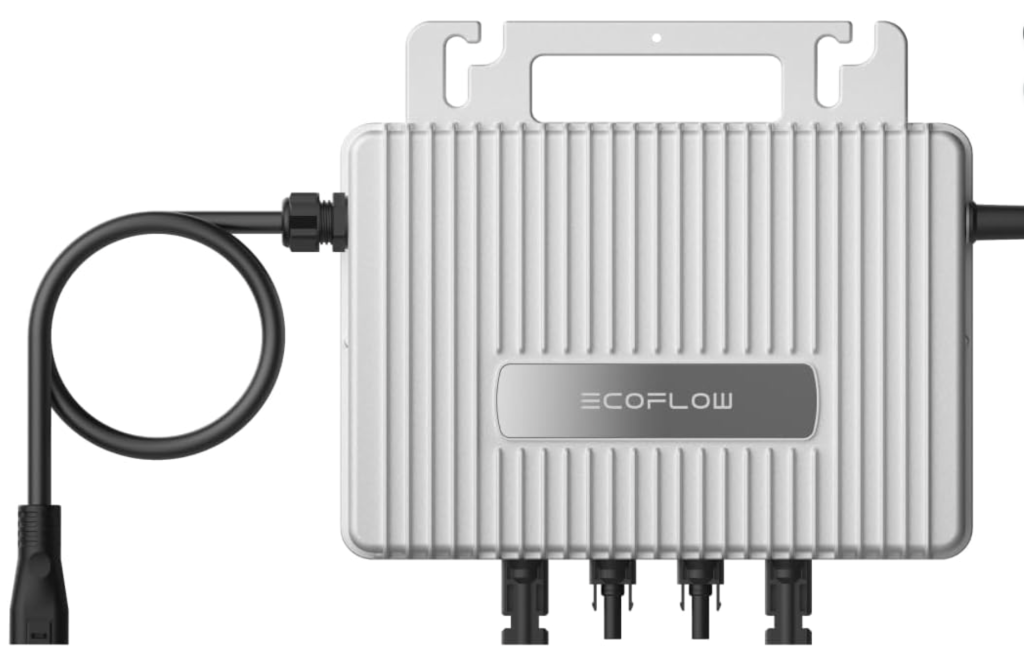
    EcoFlow STREAM Microinverter Technical Audit EcoFlow STREAM Microinverter Technical Audit The mandatory brain of the UK balcony operation. A clinical evaluation of the 800W hard-cap, the 0.1-second anti-islanding relay, and why bypassing G98 grid compliance is a mathematical and legal … Read more

Anker logo

Anker

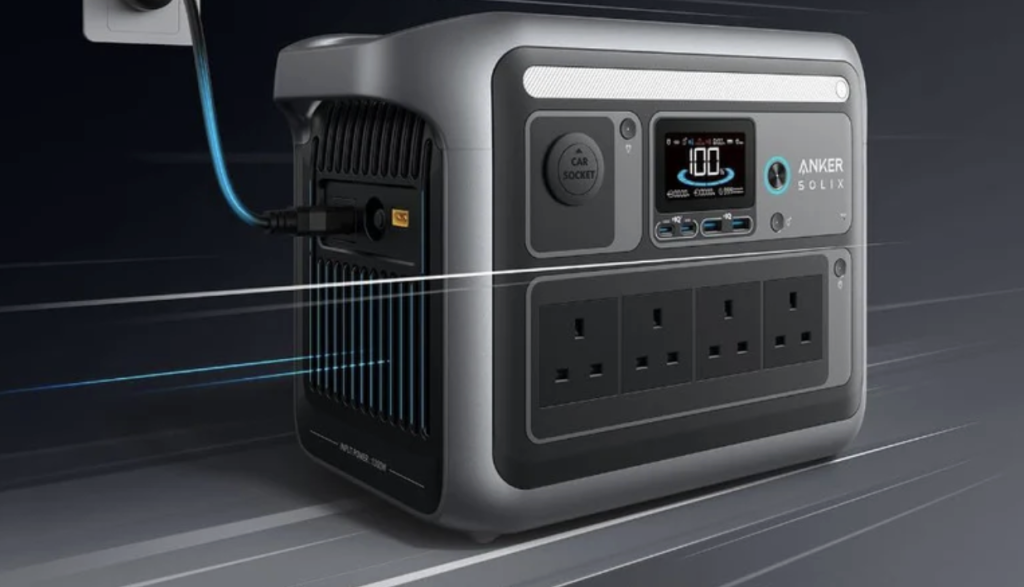
Unlock maximum potential with our specialist Anker compliant architectures. Built to utilise Anker’s cutting-edge technology, our structured frameworks ensure seamless integration, enhanced safety, and uncompromised reliability across your organisation.

We tailor architectures to meet your unique operational demands whilst maintaining full regulatory compliance. Maximise efficiency and future-proof your digital infrastructure with solutions designed by experts. Discover how our bespoke Anker designs can transform your business connectivity today.
Anker Card 1

Zendure Logo

Zendure

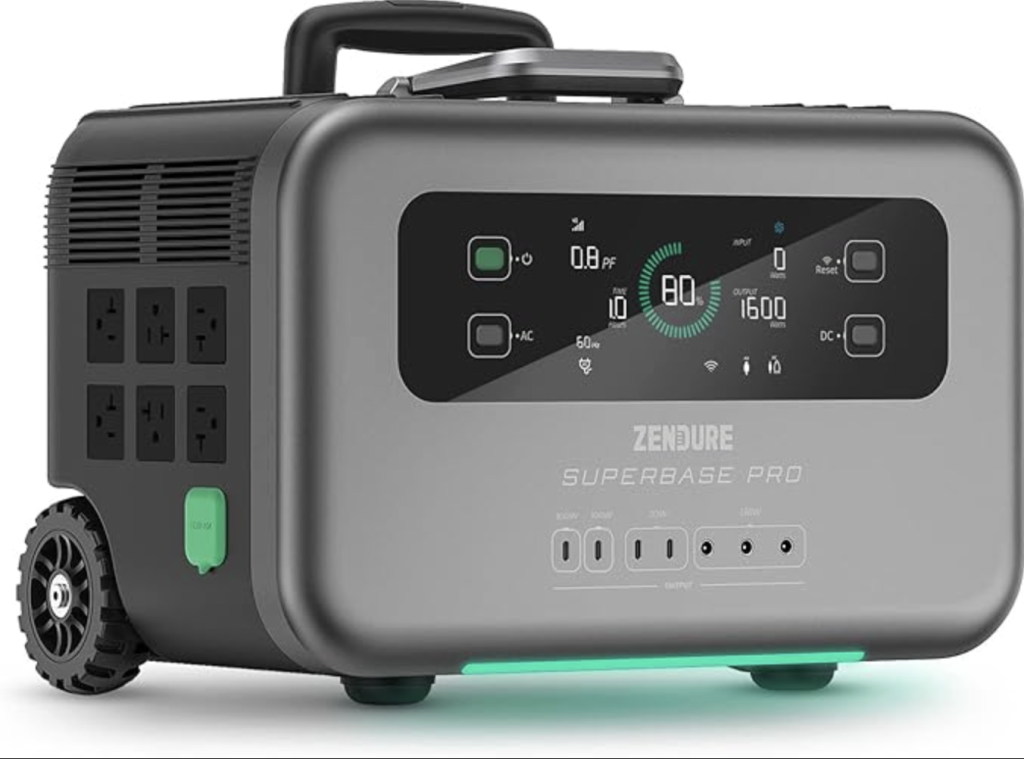
Unlock maximum potential with our specialist Anker compliant architectures. Built to utilise Anker’s cutting-edge technology, our structured frameworks ensure seamless integration, enhanced safety, and uncompromised reliability across your organisation.

We tailor architectures to meet your unique operational demands whilst maintaining full regulatory compliance. Maximise efficiency and future-proof your digital infrastructure with solutions designed by experts. Discover how our bespoke Anker designs can transform your business connectivity today.
Zendure Station 1

The Landlord Veto is Dead.

For decades, renters were locked out of renewable energy. Landlords blocked structural changes, and the legalities of plug-in solar were a grey area. As of April 2026, BS 7671 Amendment 4 and the G98 framework have formally classified sub-800W plug-in systems as compliant domestic appliances.


Realistic Financial Audit & Hard-Truth FAQs (2026 UK Metrics)

Realistic Financial Audit (2026 Metrics)

Step 1 of 15

This is not a marketing tool. If you are looking for confirmation that balcony solar is a dynamic cost-elimination strategy, you have misunderstood the mathematics. This auditor evaluates 15 technical and economic variables—from regional insolation to the ‘SEG Trap’—to define your strictly realistic amortization period.

The standard variable utility rate in 2026 is modeled at 27p per kWh. We will now determine if your specific rental profile can realistically compete with the grid.

Question?
Explanation…

Hard-Truth FAQS

Addressing the final lingering anxieties directly and clinically. Operating portable generation on a rental property requires regulatory accuracy, not guesswork.

Q: Can my landlord legally stop me?
The legal parameters of your tenancy agreement almost universally prohibit structural modifications. Your landlord can absolutely prevent you from drilling into their external brickwork, balustrades, or windows to secure hardware. They cannot, however, legally stop you from plugging a certified, sub-800W, BS 7671 compliant electronic appliance into a standard wall socket, provided that hardware is secured using non-destructive mounts like balustrade clamps or weighted ballast. You must treat this as a high-powered electronic device, not a construction project, to ensure contract compliance.
Compare Compliant Appliance Architectures
Q: Will I get paid for exporting excess solar?
No. The Smart Export Guarantee (SEG) is the statutory mechanism for utility payments, but it requires an MCS (Microgeneration Certification Scheme) certified installation performed by an accredited engineer. Plug-and-play systems bypass MCS certification specifically to maintain user-installability and lower costs, meaning they do not qualify for the SEG. Any surplus energy generated and fed back into the National Grid is effectively ‘free energy’ donated to your energy supplier. Your entire financial logic must revolve exclusively around consuming what you generate through algorithmic Peak-Shaving.
Standard Solar (MCS) SEG Y Balcony Solar (G98 Appliance) SEG N Paid for exports (~15p/kWh) Yield donated for FREE. ROI = Offset ONLY
Mastering Peak-Shaving ROI
Q: Do I need an electrician?
No. The regulatory landscape for sub-800W systems was clarified specifically to support decentralized generation. Providing your micro-inverter has built-in, type-tested 0.1-second Loss of Mains protection (anti-islanding) and the AC output is limited to 800W, the entire kit is legally classified as a user-installable consumer appliance. You are not performing internal wiring modifications; you are plugging in a device. You must verify, however, that your external socket is residual current device (RCD) protected, which is standard on all modern UK installations.
Verify G98 Compliance Protocols
Q: Are these things fire hazards?
The physical fire risk of a plug-and-play solar system is exceptionally low when utilizing BS 7671 compliant hardware. Standardizing your setup to 800W ensures that the continuous generation load cannot technically exceed the thermal rating of existing 2.5mm² domestic ring mains wiring, entirely preventing conductor overheating. Furthermore, certified G98 hardware micro-inverters automatically shut down within 0.1 seconds of grid disconnection, eliminating any risk of the prongs of the plug becoming live or creating arcs. Utilizing dedicated outdoor sockets instead of extension leads neutralizes the final mechanical pain point.
Technical Installation Best Practices
Q: What happens when my tenancy ends?
The entire operational philosophy of a renter-compliant architecture is non-destructibility. Because you utilize clamps or ballast instead of drilling, the entire takedown process for an 800W kit is approximately 15 minutes. Unplug the system, detach the micro-inverter, unclasp the panels, and pack them as you would any other large household appliance. By moving the asset to your new property, you preserve the unamortized capital expenditure. Your contents insurance must be updated, but the physical asset is portable.
Read the Moving Guide
Q: Do I need to notify the DNO (DNO is your landlord’s problem)?
The statutory notification pathway defined under G98 Engineering Recommendation dictates that decentralized generators must notify the regional Distribution Network Operator (DNO) of the connection. However, a significant regulatory simplification exists: sub-800W systems utilized strictly as plug-in appliances fall outside of standard G98 notification requirements for the property owner. You are plugging in a consumer device, not modifying internal grid infrastructure. Your supplier (Octopus, OVO, etc.) may be curious if you utilize a smart meter, but the DNO has no simplified process to prevent the connection of certified appliances.
DNO Notification Clarification
Q: Will this void my insurance?
The risk to buildings insurance (landlord’s problem) is zero because you are not drilling. The risk to your contents insurance (your problem) depends entirely on your notification accuracy. Most standard UK contents policies do not explicitly cover high-value decentralized energy generation hardware without specific notification. You must formally inform your insurer that you possess a portable, user-installable solar kit and request that the hardware value (£600-£900) is accurately reflected in your contents schedule to ensure you have full protection against theft, wind damage, or electrical failure.
Insurance Wording Guide
Q: Can I run my kettle or hob on it?
Absolutely not. A UK plug-and-play solar kit is strictly capped at 800W AC output under the BS 7671 regulatory framework to maintain compliance as an appliance. High-draw resistive loads like kettles, electric hobs, and electric showers consume approximately 3000W+ (3kW+). An 800W kit cannot provide enough instantaneous current. When you switch a kettle on, the grid will seamlessly supply the full 3000W required, billing you at standard rates, entirely bypassing your generation yield which continues to supplement your baseload.
Analyze Appliance Load Data
Q: What is this BS 7671 thing? (Is it just a guideline?)
BS 7671 (IET Wiring Regulations) is the definitive national standard for electrical installations in the UK. While not technically statutory law, it is almost universally cited as evidence of professional competence in legal challenges, tenancy disputes, and insurance investigations. Amendment 4, enacted specifically to address decentralized energy, created a formalized connection pathway for user-installable plug-in generation kits (G98/BS7671 compliant appliances). It is not a suggestion; it is the regulatory framework that legalizes your system. If your hardware is uncertified or uncompliant, your connection is technically an unauthorized grid modification.
Analyze the Regulations
Q: Is a battery worth it?
This is purely a clinical, mathematical evaluation. Without a battery, your plug-and-play system relies strictly on direct consumption. If you are not present during daylight hours (9-5 office work), any generation that exceeds your minimal baseload is supplementally donated to the grid for free. This yield hemorrhage significantly degrades your ROI. Integrating a battery (e.g., Anker SOLIX or EcoFlow ecosystem) allows you to capture this yield and dynamically shift its use to the high-cost evening peak. While it doubles your initial capital expenditure (Capex), it radically increases self-consumption and improves long-term strategic utility.
View the Battery Masterclass
Q: Will my energy supplier give me issues?
It is improbable. Since decentralized energy generation with compliant, sub-800W hardware is legal, your supplier cannot penalize you. They cannot prevent you from plugging in a certified electronic appliance. Suppliers primarily care about grid stability (handled by DNO) and accurate billing (handled by your smart meter). They may contact you if their systems detect unusual export activity (given they have zero MCS record for your property), but they cannot disconnect you provided your G98 certified hardware micro-inverter automatically shuts down within 0.1 seconds of grid disconnection, eliminating any risk.
Understand Supplier Friction
Q: Do these things require maintenance?
Yes. Because balcony panels operate at non-optimal vertical or near-vertical angles, they lack the significant self-cleaning ‘washing’ action of angled rooftop arrays. Urban soot, coastal salt, and general atmospheric grime accumulate quickly, reducing irradiance reception. Clinical yield degradation from grime is typically 5-8%. To protect your ROI, you must implement a quarterly maintenance routine using deionized water and a non-abrasive soft sponge to mechanically clean the array surface. Avoid chemicals, which can degrade the expensive Anti-Reflective (AR) coating on modern all-black mono-crystalline panels.
Maintenance How-To Guide
Q: Can’t I just buy a cheap uncertified import from Europe?
This is the most critical technical pain point. A European plug-and-play kit may appear to possess the same specifications, but it rarely possesses the specific, type-tested UK G98 Loss of Mains certification, which dictates that anti-islanding shuts down the inverter within 0.1 seconds of grid disconnection (the European standard is often 0.2 seconds). Utilizing non-UK certified hardware renders your connection technically unauthorized and legally unprotected. You void all insurance coverage, jeopardize your tenancy agreement, and supplementally commit an offense under grid connection regulations. Compliance is an engineering necessity, not a cost barrier.
Compare 2026 UK Hardware
Q: Do I need a smart meter?
You do not *need* a smart meter, but it radically alters the financial monitoring of your peak-shaving strategy. Legacy ‘dumb’ meters will mathematically increment imports correctly but cannot distinguish export supplementally current from import current, meaning they continue to count exported solar as billable units if they possess a specific supplementally reverse-run prevention mechanical mechanism. A smart meter is supplementally mandatory to clinically verify that your real-time generation is physically offsetting your retail import current and that you are not financial loss through undetected grid donation.
Read the Smart Meter Guide
Q: What is the single fatal flaw in this whole plan?
The fatal flaw in any decentralized generation strategy is not regulatory; it is user behavioral friction. If your initial capital expenditure analysis (generated by the audit tool above) dictates that direct consumption is required to amortize the hardware in 4 years, but your occupancy shifts to 9-5 office work and you do not supplementally automate your loads or integrate a battery, your ROI is destroyed. Plug-and-play solar without storage is aSupplement that only functions if you are *physically present* during peak irradiance to intercept the yield. If you are not home and fail to adjust your lifestyle metrics, the strategy mathematically fails.
Mastering Peak-Shaving Strategy

The Diagnostic Suite
Diagnostic Suite Online

Stop Guessing. Run the Diagnostics.

Operating uncertified or miscalculated hardware on a rental property carries severe financial and legal liabilities. Utilize these clinical evaluation tools to establish the strict operational realities of your proposed setup before deploying capital.

Module_01 Legal / BS 7671

Compliance Setup Checker

Marketing literature will not protect you from a tenancy breach or a voided insurance policy. This 10-step audit rigorously cross-examines your hardware specifications and physical deployment strategy against the stringent requirements of BS 7671 Amendment 4. It clinically assesses adherence to the 800W hard limit, verify 0.1-second Loss of Mains protection protocols, and flags illegal structural modifications. If your setup fails this audit, it is technically an unauthorized grid modification.

  • Verifies BS 7671 parameters
  • Assesses physical mounting legality
  • Flags critical fire/electrical hazards
Run Compliance Audit
Module_02 Financial / ROI

Advanced Peak-Shaving Calculator

Calculating Return on Investment based on 100% self-consumption is a mathematical fallacy for the average worker. Because sub-800W systems do not qualify for SEG payments, any uncaptured yield is surrendered to the grid for £0.00. This ruthless 15-parameter algorithm profiles your exact occupancy hours, maps your specific daytime baseload, and cross-references your current tariff structure to expose the true financial inefficiency of your setup. It is designed to strip away manufacturer hype and deliver a clinical amortization timeline.

  • Profiles exact baseload draw
  • Calculates uncompensated yield waste
  • Generates objective amortization data
Calculate Yield Efficiency
Module_03 Statutory / G98

DNO Notification Gateway

Your retail energy supplier (e.g., Octopus, British Gas) does not own the physical grid infrastructure, and notifying them of your installation satisfies zero legal requirements. You have a strict 28-day statutory window to submit your G98 paperwork to the correct regional Distribution Network Operator (DNO). This tool utilizes your 13-digit MPAN to definitively isolate your specific engineering portal. Sending your compliance record to the incorrect regional operator renders your installation legally unprotected.

  • Isolates 2-digit MPAN codes
  • Bypasses supplier confusion
  • Secures direct G98 portal routing
Find My DNO


Section 5: Unfiltered Testimonials (Social Proof)

UX Goal: Build trust not through fake exuberance, but through highly specific, relatable renter victories.

  • Section Title (H2): Deployed by UK Renters
  • Review 1 (The Legal Win): “My letting agent tried to issue a breach of tenancy for ‘unauthorized electrical modifications.’ I used the BS 7671 compliance templates from this site, pointed out it’s a certified appliance, and they backed down immediately. System has been running flawlessly for 6 months.” – James T., Manchester (EcoFlow setup)
  • Review 2 (The Financial Realist): “RentalRenewables saved me from the ‘SEG Trap.’ I was about to buy a system without a battery, not realizing I’d be giving all my midday power to the grid for free while at the office. Recalibrated my setup, bought a 1kWh battery buffer, and I’m successfully shaving my 6 PM peak tariff.” – Sarah L., London (Anker setup)